Matthew 24
Temple Judgment and the End of the Age
1. Immediate Context
Jesus has just pronounced the house “left desolate” (Matt 23) and now interprets the coming temple collapse as the climax of His covenant lawsuit against Jerusalem. Given on the Mount of Olives around AD 30, this discourse answers the disciples’ urgent questions about “these things” and “the end of the age.” As first-century Jews, the disciples understood the "age" (aiōn) as the Mosaic administration, not the end of the physical world. Jesus provides a detailed prophetic outline that was strictly bounded within their generation (v. 34), fulfilled completely in the Roman siege and destruction of Jerusalem in AD 70.
2. Scripture (WEB)
Source (verbatim): https://ebible.org/web/MAT24.htm
2 But he answered them, “You see all of these things, don’t you? Most certainly I tell you, there will not be left here one stone on another, that will not be thrown down.”
3 As he sat on the Mount of Olives, the disciples came to him privately, saying, “Tell us, when will these things be? What is the sign of your coming, and of the end of the age?”
4 Jesus answered them, “Be careful that no one leads you astray. 5 For many will come in my name, saying, ‘I am the Christ,’ and will lead many astray. 6 You will hear of wars and rumors of wars. See that you aren’t troubled, for all this must happen, but the end is not yet. 7 For nation will rise against nation, and kingdom against kingdom; and there will be famines, plagues, and earthquakes in various places. 8 But all these things are the beginning of birth pains.
9 “Then they will deliver you up to oppression and will kill you. You will be hated by all of the nations for my name’s sake. 10 Then many will stumble, and will deliver up one another, and will hate one another. 11 Many false prophets will arise and will lead many astray. 12 Because iniquity will be multiplied, the love of many will grow cold. 13 But he who endures to the end will be saved. 14 This Good News of the Kingdom will be preached in the whole world for a testimony to all the nations, and then the end will come.
15 “When, therefore, you see the abomination of desolation, which was spoken of through Daniel the prophet, standing in the holy place (let the reader understand), 16 then let those who are in Judea flee to the mountains. 17 Let him who is on the housetop not go down to take out the things that are in his house. 18 Let him who is in the field not return back to get his clothes. 19 But woe to those who are with child and to nursing mothers in those days! 20 Pray that your flight will not be in the winter nor on a Sabbath, 21 for then there will be great suffering, such as has not been from the beginning of the world until now, no, nor ever will be. 22 Unless those days had been shortened, no flesh would have been saved. But for the sake of the chosen ones, those days will be shortened.
23 “Then if any man tells you, ‘Behold, here is the Christ!’ or, ‘There!’ don’t believe it. 24 For false christs and false prophets will arise, and they will show great signs and wonders, so as to lead astray, if possible, even the chosen ones. 25 “Behold, I have told you beforehand. 26 “If therefore they tell you, ‘Behold, he is in the wilderness,’ don’t go out; or ‘Behold, he is in the inner rooms,’ don’t believe it. 27 For as the lightning flashes from the east, and is seen even to the west, so will the coming of the Son of Man be. 28 For wherever the carcass is, that is where the vultures gather together.
29 “But immediately after the suffering of those days, the sun will be darkened, the moon will not give its light, the stars will fall from the sky, and the powers of the heavens will be shaken; 30 and then the sign of the Son of Man will appear in the sky. Then all the tribes of the earth will mourn, and they will see the Son of Man coming on the clouds of the sky with power and great glory. 31 He will send out his angels with a great sound of a trumpet, and they will gather together his chosen ones from the four winds, from one end of the sky to the other.
32 “Now from the fig tree learn this parable: When its branch has now become tender and produces its leaves, you know that the summer is near. 33 Even so you also, when you see all these things, know that he is near, even at the doors. 34 Most certainly I tell you, this generation will not pass away until all these things are accomplished. 35 Heaven and earth will pass away, but my words will not pass away.
36 “But no one knows of that day and hour, not even the angels of heaven, but my Father only. 37 As the days of Noah were, so will the coming of the Son of Man be. 38 For as in those days which were before the flood they were eating and drinking, marrying and giving in marriage, until the day that Noah entered into the ship, 39 and they didn’t know until the flood came and took them all away, so will the coming of the Son of Man be. 40 Then two men will be in the field: one will be taken and one will be left. 41 Two women will be grinding at the mill: one will be taken and one will be left.
42 Watch therefore, for you don’t know in what hour your Lord comes. 43 But know this, that if the master of the house had known in what watch of the night the thief was coming, he would have watched, and would not have allowed his house to be broken into. 44 Therefore also be ready, for in an hour that you don’t expect, the Son of Man will come.
45 “Who then is the faithful and wise servant, whom his lord has set over his household, to give them their food in due season? 46 Blessed is that servant whom his lord finds doing so when he comes. 47 Most certainly I tell you that he will set him over all that he has. 48 But if that evil servant should say in his heart, ‘My lord is delaying his coming,’ 49 and begins to beat his fellow servants, and eat and drink with the drunkards, 50 the lord of that servant will come in a day when he doesn’t expect it and in an hour when he doesn’t know it, 51 and will cut him in pieces and appoint his portion with the hypocrites. That is where the weeping and grinding of teeth will be.”
3. Fulfillment Notes
- Covenant Focus: Jesus anchors the prophecy in the temple’s fall and the first-century covenant crisis, not a global end-of-the-world scenario.
- Time Locks: Markers like “near,” “at hand,” and “this generation” (v. 34) strictly bind the fulfillment to that living audience.
- Vindication: The “coming” language signals Christ's covenantal vindication and judgment on Jerusalem climaxing in AD 70.
- Prophetic Idiom: Cosmic imagery (v. 29) follows the Hebrew-prophetic pattern for de-creation of ruling powers, not astronomical predictions.
4. Annotations
- one stone on another — Temple judgment language: total dismantling of the old covenant house, fulfilled in AD 70.
- the end of the age — The close of the Mosaic age, not the end of the physical cosmos (kosmos).
- abomination of desolation — Danielic covenant-defilement marker signaling imminent Judean flight (Luke 21:20 specifies Roman armies).
- this generation — The living audience Jesus addressed; the 40-year limit (AD 30-70).
- Heaven and earth — Covenant-order language for the old world of Torah/temple passing away (Deut 32:1).
- coming on the clouds — Prophetic judgment/vindication idiom (Dan 7:13-14), signifying Christ's enthronement.
5. Fulfillment Commentary
1) The Question Is About the Temple and “These Things”
Matthew 24 begins with an unmistakable concrete referent: the temple. Jesus has just announced covenant exposure and judgment on Jerusalem’s leadership (Matt 23), and as he leaves the temple, the disciples point out its buildings. The architecture of Herod's Temple was breathtaking; some of the stones were over 40 feet long and weighed hundreds of tons. Jesus responds with a total demolition forecast—“not be left here one stone on another.” That line is not a mood, a metaphor, or a vague spiritual principle. It is covenant-judgment speech attached to a real building in their real city. In AD 70, Roman soldiers literally pried the stones apart to retrieve gold that had melted into the crevices during the fire, fulfilling Jesus' words to the letter.
The disciples’ follow-up question has two parts that belong together in their minds: “When will these things be?” (the temple judgment) and “what is the sign of your coming, and of the end of the age?” The lock point is the phrase “end of the age,” which in covenant categories means the closing of the Mosaic administration, not the termination of the created order. If “age” is the covenant world of Torah-temple-priesthood, then “end” is the transition into the New Covenant order established in Christ and publicly vindicated in the first-century crisis.
2) Birth Pains, False Christs, and the Covenant Pressure Cooker
Jesus lists wars, rumors, upheavals, and distress as “the beginning of birth pains.” In prophetic-covenant terms, birth pains are not random history; they are the pressure signals of an order about to give way to another. The old covenant house is being brought to account, and the new covenant reality is emerging. This is why Jesus repeatedly commands sobriety: “don’t be troubled,” “don’t be led astray,” “I have told you beforehand.” The aim is not to feed speculation but to keep first-century disciples anchored.
Persecution language also fits the immediate apostolic horizon: “they will deliver you up… you will be hated… many will stumble.” The church’s early decades were marked by covenant conflict—synagogue expulsion, accusations, and pressure from both Judean and Roman authorities. Matthew is not writing a generic tribulation template; he is recording Jesus’ covenant lawsuit warning and shepherding counsel for the generation standing at the threshold of the transition.
3) The Abomination and the Local Flight Command
The “abomination of desolation” (v. 15) is the pivot point that triggers a very specific instruction: “then let those who are in Judea flee to the mountains.” This is geography. It is calendar-aware (“pray that your flight will not be… on a Sabbath”). It assumes local travel realities (“roof,” “field,” “cloak”). These details are not compatible with a global end-of-the-world scenario. They are compatible with a covenant-judgment event that strikes Judea and Jerusalem in the first century.
Daniel’s abomination imagery is covenantal: profanation, usurpation, and the climax of covenant-breaking reaching its terminal judgment. Luke 21:20 provides the interpretive key: "When you see Jerusalem surrounded by armies, then know that its desolation is near." Jesus signals that when that marker becomes visible, disciples are not to debate; they are to flee. Historical records confirm that the first-century Christians in Jerusalem heeded this command, fleeing to Pella across the Jordan River and escaping the horrific siege.
4) “Coming” as Vindication: Clouds, Tribes, and Prophetic De-Creation
The most contested lines involve cosmic imagery and “coming on the clouds.” In the Hebrew prophetic register, sun/moon/stars language regularly depicts the collapse of rulers and covenant order—de-creation imagery for regime change and judgment, not a literal astronomy forecast. Matthew’s language is saturated with that register. When Babylon fell, the stars were darkened (Isaiah 13:10). When Egypt fell, the sun was covered with a cloud (Ezekiel 32:7).
“They will see the Son of Man coming on the clouds” evokes Daniel’s court imagery (Daniel 7:13) where the Son of Man is vindicated and given authority. In covenant terms, this is Jesus’ public vindication: the rejected Messiah is shown to be enthroned, and the old covenant persecuting system is judged.
5) The Gathering of the Elect (v. 31)
When Jesus mentions the angels gathering the elect with a trumpet blast, futurists often mistake this for a biological "rapture." But this is Jubilee and Exodus language. The Greek word for "angels" simply means "messengers." With the physical, localized temple destroyed, the new gathering point is Christ Himself. After the fall of the Old Covenant system, the gospel messengers went out to the four winds, gathering God's people from every nation into the New Covenant body, free from the geographical and genealogical boundaries of Jerusalem.
6) The Time-Lock: “This Generation” and the Passing of Heaven and Earth
Jesus then locks interpretation with one of the strongest time markers in the Gospels: “Most certainly I tell you, this generation will not pass away until all these things are accomplished.” Whatever interpretive gymnastics a reader attempts, this line is the governor. It forbids pushing fulfillment thousands of years away while pretending to honor the text. Under the covenantal framework, “this generation” means the living audience Jesus addressed. From Jesus' declaration in AD 30 to the Temple's destruction in AD 70 is exactly 40 years—a biblical generation.
“Heaven and earth will pass away, but my words will not pass away” is covenant weight language: the old covenant world (its temple center, priesthood, and accusatory administration) is shakable and passing, but Christ’s word stands. This is not the annihilation of the cosmos; it is the irreversible triumph of the New Covenant reality over the fading Mosaic order.
7) “One Taken, One Left” — The Noahic Reversal
Modern pop-theology uses verses 37-41 to teach a "Left Behind" Rapture where believers are whisked away to heaven. But Jesus completely reverses this assumption by pointing to the days of Noah: “the flood came and took them all away.”
In the flood, the wicked were the ones "taken" in judgment, and the righteous (Noah and his family) were the ones "left" safely on the earth. Jesus is warning that AD 70 would be exactly the same. Those who ignored His warnings were "taken" in the Roman siege and slaughtered. Those who listened to His commands to flee were "left" alive to inherit the land and the New Covenant kingdom. To be "left behind" in Matthew 24 was the ultimate blessing!
8) The New Covenant Resolution
The resolution is plain: the old temple order collapses, the covenant lawsuit reaches its historical climax, and Christ’s kingship is publicly vindicated in the transition culminating in AD 70. The Kingdom is not waiting; it is present. Access is not postponed; it is open. The “end” is not the end of creation; it is the end of the Mosaic age, making way for the settled New Creation life in the Spirit.
10. Historical Evidence
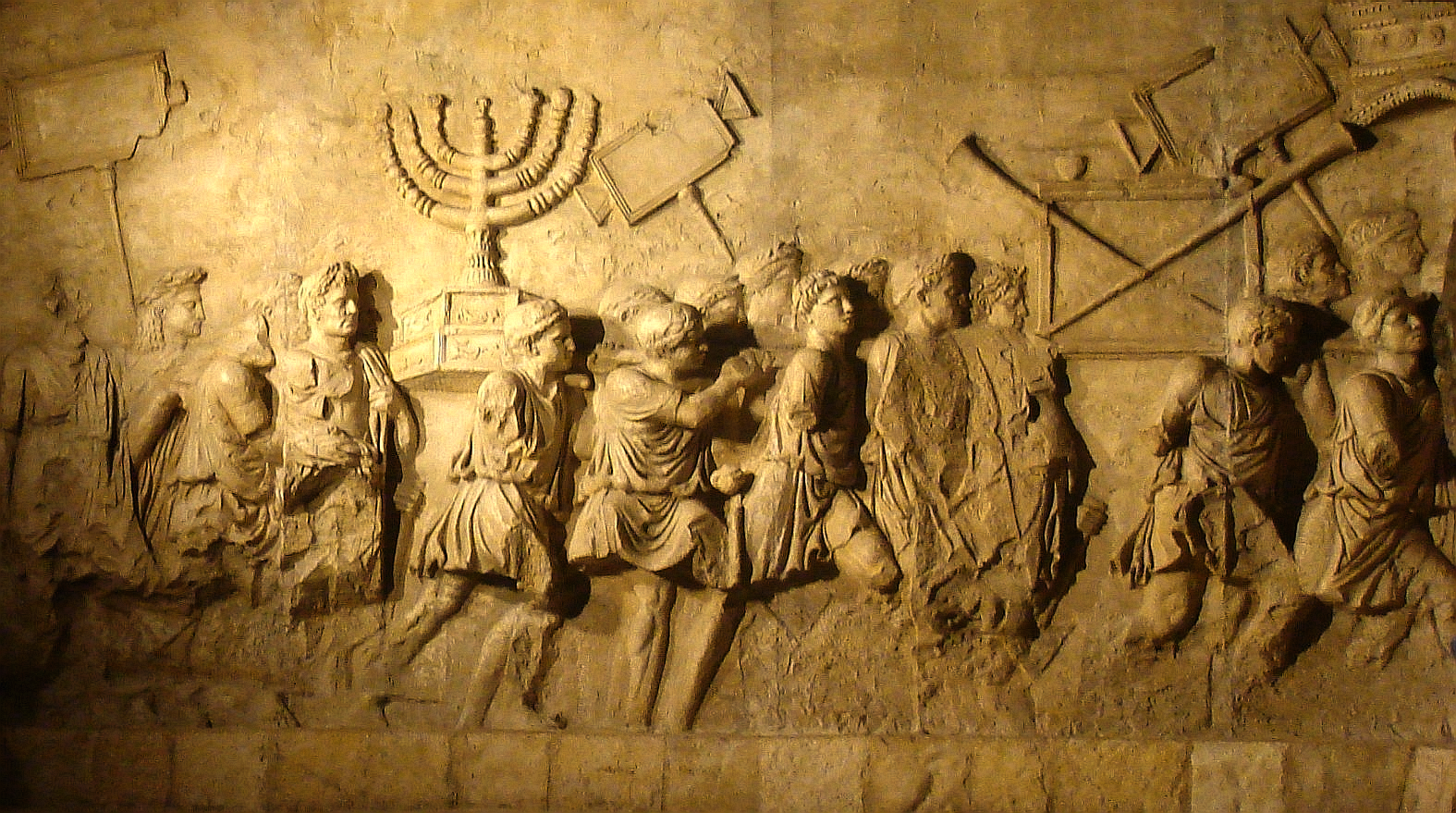
The Jewish historian Flavius Josephus, an eyewitness to the destruction, provides statistics that confirm Jesus' prophecy of "great suffering" and the "stone on stone" dismantling:
- Casualties: Approximately 1.1 million deaths were recorded in Jerusalem, as the city was overcrowded for Passover when the Roman siege began.
- Total Destruction: Josephus notes that the city was so thoroughly razed to the ground that "no one visiting it would believe it had ever been inhabited" (The Jewish War, VII.1.1).
- Gold Looting: Roman soldiers literally "flipped" the stones of the temple to retrieve the gold leaf that had melted into the foundation crevices during the fire, perfectly executing Christ's judgment.
New Creation Reality & Reflection
This chapter calls you to live from settled Kingdom reality: Christ is vindicated, access is open, and your life is led from presence—not fear. You’re not reading headlines for doom; you’re reading covenant history for assurance. Christ’s word stands and your identity is secure in him. The age of types, shadows, and bloody sacrifices is over. You dwell in the unshakable Kingdom.
Where are you still treating Christ’s reign as “pending,” instead of resting in the settled New Covenant reality he established?
Prophecy Hub Links & Cross-References
- Daniel 9 (WEB) — The prophecy of the temple destruction.
- Isaiah 13 (WEB) — Cosmic judgment language precedent.
- Luke 21 — Parallel account clarifying the "abomination."
